

Gestures of Kato-ken
Hands of those who listen and those who speak: even with the captions it is not difficult to distinguish. Hand gesture aremeans for humans to unconsciously portray how they feel, amanifestation of non-verbal communication. Being in the same shift as Sakiko and Hitomi on the Wednesday morning, I proceed to observe how they interact nonverbally with their conversation partners. As they explain, they grasp their hands as if we are trying to hold something intangible, bringing it out occasionally and then back towards them as they direct their conversations towards their own experiences. When things become harder and more abstract, their hands moved vigorously, moving in some circular motion outwards, as if they are trying to bring something out of their chest. To maintain some form of courtesy, they abstained from pointing, and use the whole hand to gesture toward the panels.
When their partnerslisten, I seetheir partnersholding onto the cards, fliers and bags. Those who become particularly absorbed in the conversation, arms become crossed against their chest, body facing the speaker, legs slightly bent, but in a relaxed manner. As they hand them the DM cards, the listeners’ hands become more playful with the object in their possession, holding loosely, absentmindedly brushing the fingers along the edges. Others, while with their head turned towards their conversation partner, flip the booklets mindlessly.
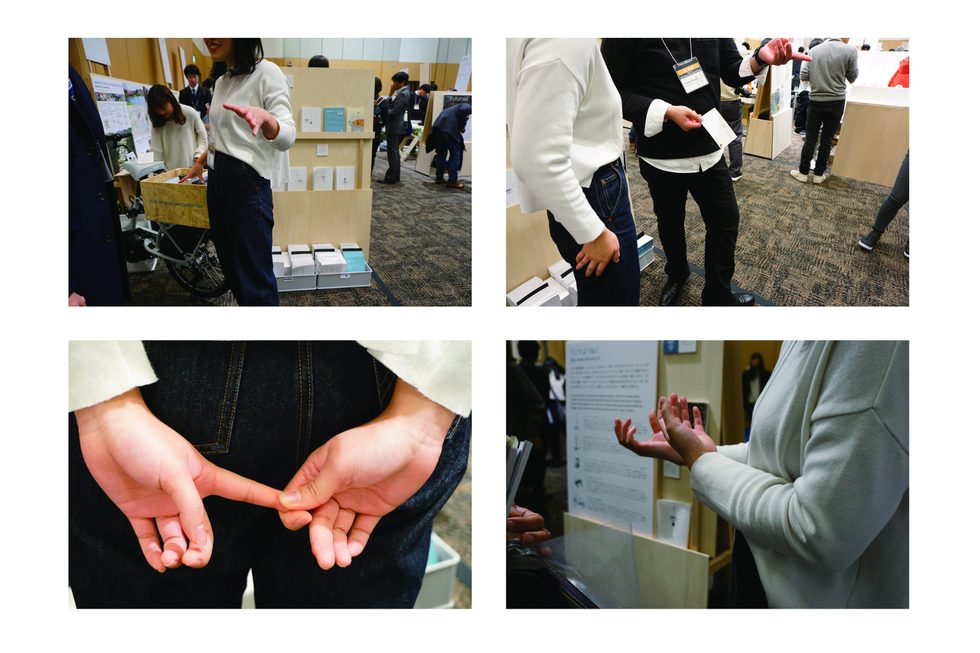
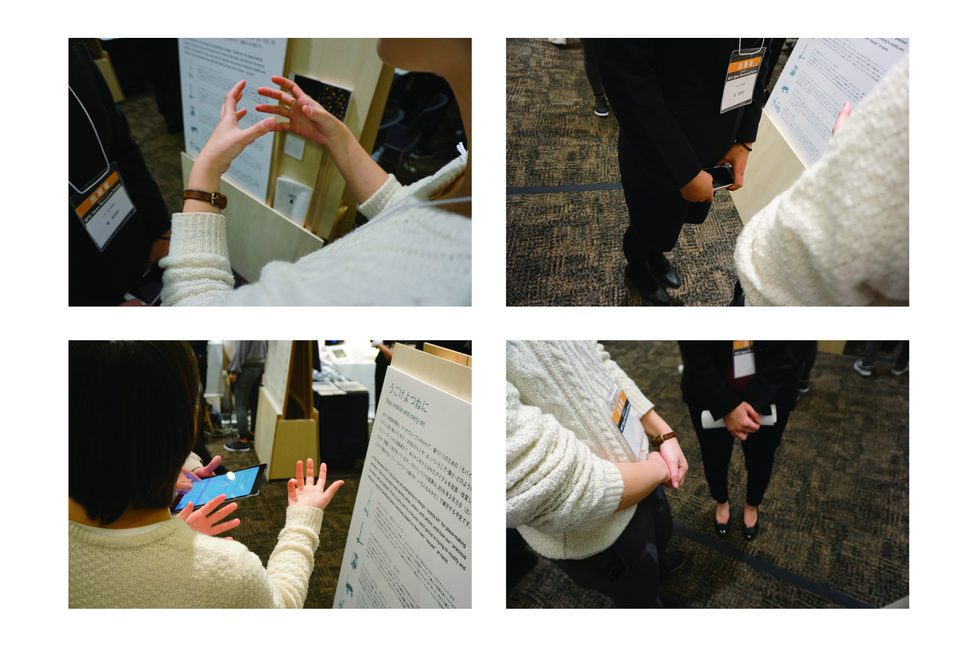
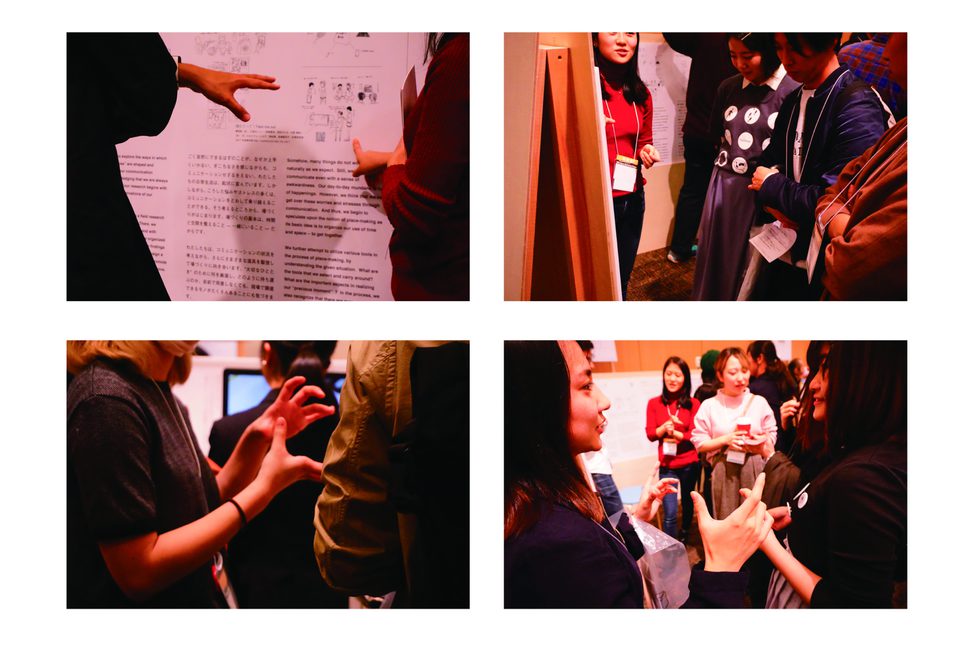
The second day I returned to the venue, it was late afternoon and walking without brushing shoulders with someone was difficult. Kato ken’s booth was more packed than I have ever seen. Was it the heat of the room that made everyone so much more energetic? With animated hand movements, the members proceed to explain the contents of the panels. Pointing at diagrams and using tools like tablets, interactivity increases and so does the heat of the conversation. Unlike Sakiko and Hitomi’s hands, who tends to look like it’s grasping onto a soft, oval-like invisible object, the members looking over the booth on the second day had sharper movements, hands shaped as if grasping onto something rectangular, and almost more tangibly. Michino’s hands, like how she always does when she speaks, moves more so in an up and down manner. Kiyoto’s hand was stretched out, palm facing downwards towards the board, but he seldom pointed. Others hold the booklets against their chests. The variety of how people interacted with items in their hands and how they placed it when their hands tells me what more about kind of people they are.
Although gestures may not be complete on its own, they reflect the part of us that we are trying to bring out, whether it would be the contents of our explanation, how interested we are in the conversation, or our disposition and personality. It is also a reflection of our bodies towards the environment, both to our surroundings and towards our conversation partners. Mentally erasing the member’s verbal communication, their gestures completes the image that I have of them as individuals.